(Physics) The Poor Man’s Guide to Extending the Life of Your X-ray Tube

Image result for helpful doctor

Has the hospital left you with the responsibility of being the only X-ray technologist on call with hundreds of patients to help? Me too… Hi, I am Dr. Bob and I am here to help you cope. I have the the understanding that you are in some trouble and are going to have a rough day. The line of people that are waiting in your database that have checked in for X-rays is outrageous and you need to X-ray everyone. Do not lose hope because I am here to help… but not really. I am here to tell you some tips to keeping your X-ray tube from overheating and breaking down on you.

One of the ways that you as a radiology technologist can help prolong the life of your X-ray tube is to reduce the technical factors. For example, it is not smart to take images with high exposure times and high mAs/kVp factors. This will keep your X-ray tube from being battered by the electrons inside of the tube itself. Long exposure times or high levels of mA can both harm the tube.

Another thing that you as an X-ray technologist can do to help keep your X-ray tube running nice and smooth is to not take exposures one after another. By giving your X-ray tube some time to relax and cool down, you are enabling it to not overheat. This is important because if the tube overheats, there is a chance that it can crack the vacuum seal. Another way that you can harm your tube by overheating it is by prepping the tube too much and not taking an exposure.

Finally, the last thing that you can do to preserve the life of your equipment is to monitor the levels of your X-ray tube. Some machines will have monitors on the control panel that can help monitor the heat of the X-ray tube. Being conscious of this as well as continually getting maintenance on the tube can reduce the chances of complications within the tube.

Image result for 10 hours later

Now that you have imaged your long line of patients and have not completely destroyed your machine, you can now finally sit down for a minute. After a long day of work and constant monitoring, you have finally realized that what I have subjected you do only makes your job more complicated and longer. You now realize the level of maintenance that you must be aware of when monitoring an expensive piece of equipment.

Image result for angry dr

Have Fun… and don’t forget about the charts to check exposure factors…

(Physics) Current, Resistance, & Potential Difference

Electronic Potential (Volts), Current (Amperes), and Resistance (Ohms) are what define ohms law. Ohms law is the foundation for all electronics because it is the relationship between the three fundamentals of electrical energy.

Electronic potential is the ability to create a charge because of the fact that there is a separation of charges. Electronic potential is synonymous with the word volt because it is what levels in electricity are defined as. Voltage differences are the changes in electronic potential when amperes and ohms are constant.

Image result for v=ir

Amperes are the unit used to measure electric current. In simpler terms, it is the amount of current that is flowing within an electric circuit. Amperes are a physical representation of the amount of current that is inside of a flowing circuit. For example, one amp is the amount of current produced by a force of one volt acting through the resistance of one ohm.

Image result for plaque build up artery

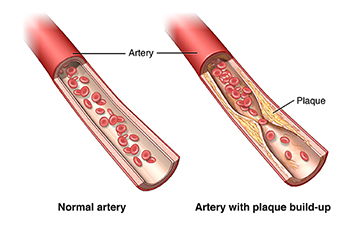
Finally, ohms are defined as an electrical resistance between two points. One way to imagine an ohm is to imagine an artery. Now if that artery has no blockage, or resister, the blood will flow normally; however, if there is plaque built up in the artery, then the blood will flow slower back to the heart because of the lack of surface area to move through. This is similar to how an ohm works inside of a current. It is the element in a circuit that halts the flow of electricity and determines the pace of its flow.

(Physics) Bremsstrahlung VS. Characteristic Radiations

There are two ways that X-rays are produced. The first way is when the electrons that are boiled off strike an electron on the anode and create an X-ray photon; this is called a characteristic X-ray. The second is when the electrons miss an electron on the anode and come close the nucleus and lose part of its energy, which are called bremsstrahlung photons.

The two images above are an example of bremsstrahlung X-rays that are produced. The one on the left is what happens when the electron spends minimal time near the nucleus and the one on the right is what happens when the electron spends a lot of energy and time near the nucleus. These X-rays are created as a product of lost energy that the electron has spent staying near the nucleus of the anode atom. These are the most common X-ray photons because of the fact that a characteristic X-ray needs to make contact with something that is small and moving fast. The way to see how much energy a bremsstrahlung X-ray will have is to subtract the initial energy of the projectile electron and the energy it has left after leaving the nucleus’ range.

A characteristic X-ray photon is the product of a projectile electron knocking an electron out of the anode’s atom. For example, imagine that the electron that is sent from the cathode to the anode hits an L electron and knocks it out of orbit. This would set a reaction in place that would have a M shell electron take its place. That movement of an electron from one shell to another creates the X-ray photon with the energy difference between the M shell and the L shell. The characteristic name is always based on the electron that was knocked out of its orbit, so in this case it is an L-characteristic electron.

(Physics) Why is Everything in X-ray Inverse?

The inverse square law is a law that relates the intensity with respect to the distance of the radiation source. The easy way to think about it is that every time you double the distance from the radiation source, you have to decrease the intensity of radiation by 1/4th.

The formula for the inverse square law is:

Intensity1/Intensity2=(Distance2/Distance1)^2

One easy way to visualize this is to take a look at a light bulb. As you move closer to the light bulb, the light gets brighter and brighter; however, as you get further away from the light, it gets less intense and dimmer. This plays a big role in radiation safety because it demonstrates that as you move further way from the radiation, the smaller the dosage will be.

(Physics) What is an Atom?

There are three parts to an atom. Each have their own unique properties and traits that make them different from one another. An atom consists of two parts, the nucleus and the orbital shell. The nucleus consists of protons and neutrons that are closely packed together. The protons are positively charged particles that keep the neutrally charged atoms (neutrons) around them. The orbital shell is where the electrons are located. Electrons are negatively charged particles that fly around the nucleus of an atom.

Image result for bohr atom

This design came from a Danish physicist named Niels Bohr. He was the one who came up with what we know today as the Bohr model. The Bohr model is the common image of an atom with a nucleus filled with protons and neutrons, as well as electrons flying around the nucleus.

One thing to note is that if an atom has equal number of protons as electrons, then it has no net charge. If the number of electrons outnumber the number of protons, then the atom is negatively charged and vice versa. The total number of electrons is equal to the total number of protons, so long that the atom is stable and neutral.

(Physics)Voltage Ripple & Why We Need It

In simple terms, a voltage ripple is the the amount of space that the peak of a wave takes to come into contact with another wave. This is important when having to figure out how much down time there is between each wave of energy.

There are several different types of different wave rectifications. The first is unrectified voltage and this is where there is nothing to stop the sine from going into the negative kV. This is demonstrated by the blue line in the image below.

Next is half-wave rectification and in this instance, the inverse voltage supply is removed from the equation and only the positive kV is supplying power. In this instance, there is down time between the positive gaps in the X-ray machine. With half-wave rectification, there is 100% voltage ripple because of the down time between crests. This type of wave is seen in the dotted green line in the image above.

The last rectification is full wave rectification and that is where the negative kV is turned into positive kV. For example, in the above image, you see the black line as a negative kV. This is not usable energy in an X-ray, so the machine will turn the negative energy into positive energy and there will be no gap in between waves, unlike half-wave rectification. The red line in the image above represents full wave rectification and still has 100% voltage ripple.

The next way to decrease ripple in an X-ray machine is to introduce the concept of three phase with different number of pulses. Three phase power is where three different waveforms are used to maintain a constant level of energy. The first of this is three phase with six pulse. In this instance, the six pulses help bring the voltage ripple down to 14%.

Now taking that concept and doubling the number of pulses, you are able to bring down the level of ripple to 4%. By increasing the number of pulses, we are able to decrease the time that the X-ray tube is not operating at its full potential.

Finally, there are high frequency waves and while these type of X-ray machines can keep energy high for an X-ray, they are often far and few between. This is because in order to create the high frequency X-ray machines, you need to spend lots and lots of money. In order to achieve less then 1% of ripple, you need to have access to a high frequency X-ray machine.

(Physics)WWE SMACK-DOWN: IONIZING VS. NONIONIZING

In the blue corner, fighting for High Energy is JASON the man STATHAMMMMMMMMMM…

In the red corner, fighting for the pride of Low Energy is STEVEN the strong URKELLLLLLLLLLLLLLLLLLL…

Both fighters are in peak performance and neither side is willing to waver. They are both willing to throw their lives away for the sake of breaking the bond between molecules.

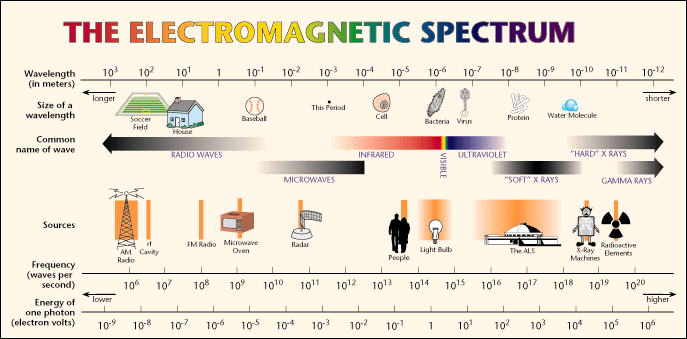
The electromagnetic spectrum is home to different levels of energies. Some, like X-rays and Gamma rays, are high energy, high frequency, and low wavelength. These have the ability to cause damage to the body, and this damage is called ionizing radiation. This type of radiation is so powerful that it has the ability to split molecules and ionizing atoms. The best way to imagine this is to think of Jason Stathem and what kind of damage he could do to a house. Jason is strong enough to be able to break down walls and smash doors open. This is the level of power that ionizing radiation has on molecules. Now because we are talking about a spectrum, there are other sources that cause electromagnetic energy but are not strong enough to cause harm under normal circumstances. Things like microwaves and radio waves do not have the ability to cause damage and these are known as non-ionizing energy. Objects like these have a lower energy, but a longer wavelength. They can be represented by Steven Urkel. . . the only damage he could do is damage to a gingerbread house.

(Physics) Energy, Wavelength, and Frequency Walk into a Bar

The bartender looks up and says, Hey, is this some kind of joke?”

Energy and frequency are proportional. Wavelength is inversely proportional to energy and frequency. When energy increases, wavelength decreases. When when frequency decreases, wavelength increases.

A fun way to remember the relationship between energy, wavelength, and frequency is by giving each of them a physical representation. Imagine energy and frequency are in a relationship: they are both compatible with one another because they are similar to each other. One day, wavelength comes walking down the street and catches the attention of energy. Wavelength is the new girl on the block. She is different and does not follow social norms. Energy is blown away after seeing wavelength and his attention starts to waver from frequency. Frequency is jealous of wavelength because of all the attention that the new girl is getting, all because she is different from the both of them. Frequency pulls energy away in order to keep him all to herself, and they try to stay away from wavelength because she is different and that threatens their natural way of life.

(Physics)Electromagnetic Spectrum

Image result for electromagnetic spectrum

The electromagnetic scale plays an important role in radiology because radiation has an electromagnetic frequency. Electromagnetic radiation is an electric and magnetic disturbance traveling through space. X-rays share this spectrum with other electromagnetic energies such as radio waves, microwaves, and light waves. Each of these energies operate on different ends of the spectrum.

One thing to mention is that ultrasound waves do not live on the electromagnetic spectrum and as as such will not share similar characteristics. Ultrasound waves are acoustic waves that propagate through a medium by means of vibrations of the molecules that make up the medium, demonstrating that they are not the same type of wave that X-rays are.

Design a site like this with WordPress.com
Get started